
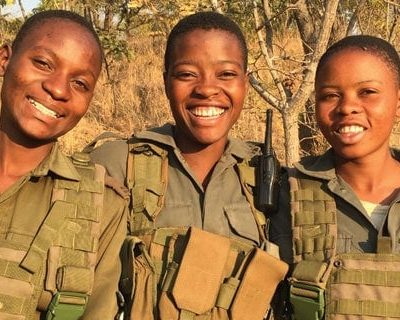
Photo Credit: Thin Green Line Foundation
The work of wildlife rangers around the world is now more important than ever. As well as protecting iconic species like rhinos and elephants from poaching and trafficking, and mediating human wildlife conflict, the conservation of habitats and wilderness areas is crucial in combatting climate change and reducing the likelihood of further outbreaks of zoonotic diseases such as covid-19.
The image that often springs to mind when thinking of a wildlife ranger is that of a stern faced man in camouflaged clothing with a large gun. While there is no denying that the bravery and dedication of these stereotypical rangers plays a huge part in wildlife conservation, all around the world there are women working tirelessly to protect wildlife and habitats, often taking a different approach with great success. Unlike their male colleagues, as well as fighting against poachers, habitat destruction, climate change and illegal wildlife trafficking, they also come up against scepticism, opposition and even disapproval from members of their own communities.
Women generally have different social networks and are more embedded in the community than men, and therefore have unique insight and influence. For example, in his December 2020 article for the Jakarta Post, journalist Alfath Asmunda met a team of volunteer forest guardians in Indonesia’s very conservative Aceh province founded and made up of mostly women. They not only make regular expeditions into the forest to search for illegal loggers and poachers, but have also fought against and won round many men in their community, including neighbours and their own husbands. Whereas they previously viewed the forest as ‘none of their business’, these men are now seeing the positive impact the women rangers are having on the environment and the knock on effect of this on flood protection in the villages which have suffered terrible damage due to rain run off from deforested land. They have managed to convince former poachers to join them as forest guides, and are working to make amends for the mistakes of their family members, many of whom have worked in illegal logging in the past.
Female rangers also tend to be better at diffusing conflict situations without using force – although they are armed, the all female Akashinga ranger team in Zimbabwe have made 72 arrests in the past 5 years without firing a shot. Some data from the Phundundu Wildlife Park, where the Akashinga are based, show that since the area has been patrolled by women, wildlife sightings on patrols have increased dramatically, and it has been suggested this is because the animals feel much less threatened by the presence of women.
For many of the Akashinga, the opportunity to work as a ranger is a chance to escape poverty or domestic violence, gain financial independence, buy property and ensure a bright future for their children. This benefits not only the rangers themselves, but the whole community, and helps to promote the idea that a better protected natural environment is worth much more than the short term gains from poaching and habitat destruction.
In general, women put more of their income back into their families and community, and working as a ranger enables many women to send their children to school. As well as having an extraordinary anti poaching record, the Black Mambas, a well known all women ranger team based near Kruger National Park in South Africa, have an extremely successful education programme in local schools. The Bush Babies programme works to educate and involve children and young people in caring for the environment, with the aim of changing attitudes to conservation in the future.
Although women still make up only a small proportion of wildlife rangers worldwide, the great success of groups like the Akashinga and the Black Mambas are being used as models in other areas as the great potential of women in this historically male dominated field is being recognised.
If you are interested in finding out more, here are some useful links: