
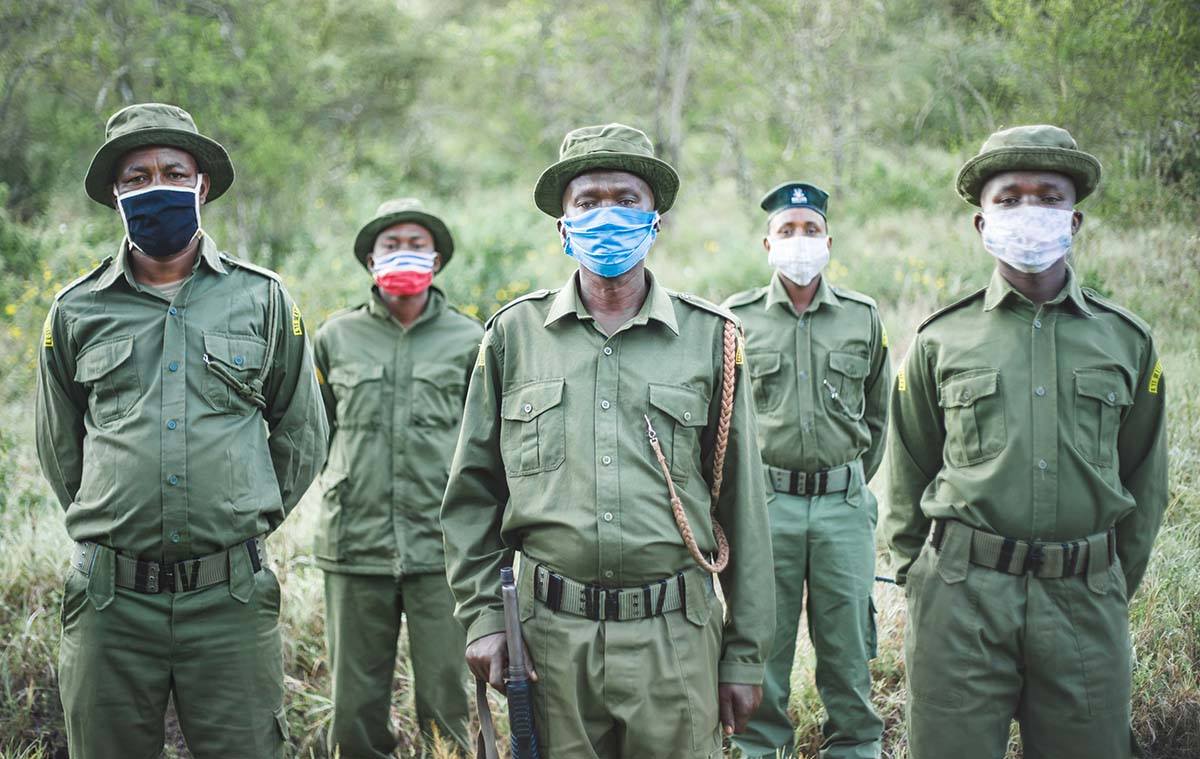
Protecting nature’s protectors: Rangers as ‘key workers’ for delivering SDGs
In June 2021, we were delighted to team up with the Institute for European Environmental Policy (IEEP) to deliver an event following on from their report looking at rangers as key workers in delivering the UN’s global Sustainable Development Goals (SDGs) by 2030.
To listen to the webinar in full, visit the IEEP website.
The webinar started with an introduction by Marianne Kettunen from the IEEP, who spoke about how protected area management is vital to delivering all the SDGs, not only those directly focussed on biodiversity and habitats – a well protected natural environment is integral to food and water security, climate change mitigation, agriculture, disease control and ending poverty. Rangers are the key workers managing relationships between the environment, wildlife and people.
Thin Green Line Foundation UK director, Abi Gatty Irving, went on to give some background
information on the organisation, our four pillars of work (Equip, Train, Connect and Emergency Response), and explained the great need for more support for rangers worldwide, many of whom are working in very dangerous conditions without adequate equipment, training or insurance. She also highlighted that in order for rangers to support the SDGs, and vice versa, it is important for them to be linked directly with policy makers.
The first panel discussion of the event was with rangers from around the world, who shared their views and experiences. Sergeant Nyaradzo Hoto, a ranger with the Akashinga programme in Zimbabwe, spoke about how the all women ranger team not only deliver fantastic conservation outcomes in the area, but also contribute to several other SDGs. The programme empowers women and enables them to earn a much better salary than in other career options available in the area. As well as working on improvements to roads, clinics and water provision, the team also works with young people to engage them in the environment and provide scholarships. On average, women spend three times more of their salary in the community, which has a knock on effect for the wider local economy.
Ranger Luso Dostibegiani from Georgia, who was inspired to follow the career path by Georgia’s first female ranger, then suggested that to meet the SDGs it is important to ensure that protected areas support local people and vice versa. She also said that she found it very helpful to share ranger experiences and stories with colleagues from around the world.
Next, Florin Halastauan, Ranger Leader for the Bison Reintroduction Project in the south west
Carpathians in Romania, and former vice president of the International ranger Federation (IRF) expanded on Abi’s earlier point about linking rangers to policy makers. He spoke about the need for rangers to be consulted on environmental issues at a political level in Europe, suggesting that without the input of rangers, the European Green Deal and other nature based solutions would not be possible.
Claudel Tshibangu, Planning, Monitoring and GIS Analyst working at Upemba National Park in the Democratic Republic of Congo (DRC) focussed on the very dangerous situations that rangers encounter on a daily basis in the line of duty. When asked what rangers in the country need to help them deliver SDGs in the future, he suggested military support in volatile situations as well as basic equipment, rations for patrol, medicines and adequate salaries. He also pointed out that funding from large organisations and governments often comes with a huge administrative burden and does
not arrive all at once, making it less effective at supporting rangers where the need is greatest.
The final speaker on the ranger panel, Joseph Tambwe Musimbi, also from DRC, was unable to join live as the region where he is based was dealing with the aftermath of a devastating volcanic eruption. This really highlights the and dangerous and challenging conditions that many rangers work in around the world. However, Marianne Kettunen was able to deliver his presentation and summarise his key points. He described how DRC has great potential for building back better with nature, and the network of protected areas in the country is growing very rapidly. The area where he works, Itombwe Natural Resource Reserve, suffers pressure from artisanal logging and hunting, mining and the possibility of hydro power, as well as poorly defined boundaries and conservation codes. However, he said the key to the successful management of this area, as well as many others in the DRC, has been having a locally oriented governing system, whereby village committees, rangers and NGOs work together to establish boundaries and rules, and there is a high level of community involvement in mapping, monitoring and patrols. Crucially, at the moment, he believes that rangers, communities and NGOs need better information and support regarding the pandemic to be able to keep themselves and others safe and prevent human to animal transmission.
After hearing from all the rangers, the webinar then moved on to the second discussion panel made up of representatives from international organisations.
Firstly, Mike Appleton of the IUCN’s World Commission on Protected Areas (WCPA) spoke about the need for more rangers to be members of policy making and steering groups, as it is all to common large organisations to treat rangers as passive operators when it is vital for them to be involved in consultation and management planning, as they are the bridge between the decision makers and what is happening on the ground.
The next panellist was Ana Maria Gonzalez, the coordinator of the World Bank Group’s Amazon Sustainable Landscapes Programme, which is involved with a vast network of protected areas in the Amazon spanning many countries. This programme directly contributes to fulfilling eight of the 17 SDGs, and rangers are key to all of these. She explained that the three basic golden rules for integrating rangers into projects are, firstly, to recognise the importance of rangers not only to protected areas but also to sustainable development in a wider context, secondly, to create frameworks for longer term funding for rangers, and thirdly to provide ongoing training and capacity building for rangers. She highlighted how hiring rangers form local communities is not only beneficial for the protected areas themselves, but also has great benefits to the local economy through increasing employment and spending in the area.
Mandy Cadman, from the UNDP Global Wildlife Programme, emphasised how rangers need to be viewed as capital asset managers and are key to maintaining partnerships and stability on the ground. She also highlighted how risk management and appropriate training are very important to their project work across Africa to protect rangers and other users of the protected areas.
The final speaker of the event, was Thin Green Line Foundation founder Sean Willmore. He spoke about how he started the NGO out of pure need to help support the families of fallen rangers, and how the need for security, equipment, training and support for rangers across the globe is huge. He pointed out that in general, rangers aren’t valued as people on the front line of conservation and are very often under paid, lack training and equipment and don’t have adequate insurance. They are do
so much more than simply protect wildlife, they are fire fighters, medical officers, climate mitigation agents, prevent the spread of zoonotic diseases and accountants in natural capital. He closed by saying ‘I can’t think of another job in the whole world that does so much for our planet.’
Overall, it is clear that rangers aren’t just a small part of the work that protected areas do to contribute to achieving the SDGs, they are absolutely vital to the success of the programme as a whole and this needs to be recognised in order for them to be adequately funded, trained and equipped to do their amazing work as safely and effectively as possible.