
World Gorilla Day – Why Rangers are Key to Successful Gorilla Conservation
Thin Green Line Foundation UK Trustee and great ape expert Ian Redmond knows a thing or two about gorillas and we asked him, ahead of World Gorilla Day 2023, some pertinent questions about this critically endangered species (both Eastern Gorillas and Western Gorillas are listed as critically endangered according to the IUCN Red List) and what we can do collectively to help them and support the rangers who protect them.
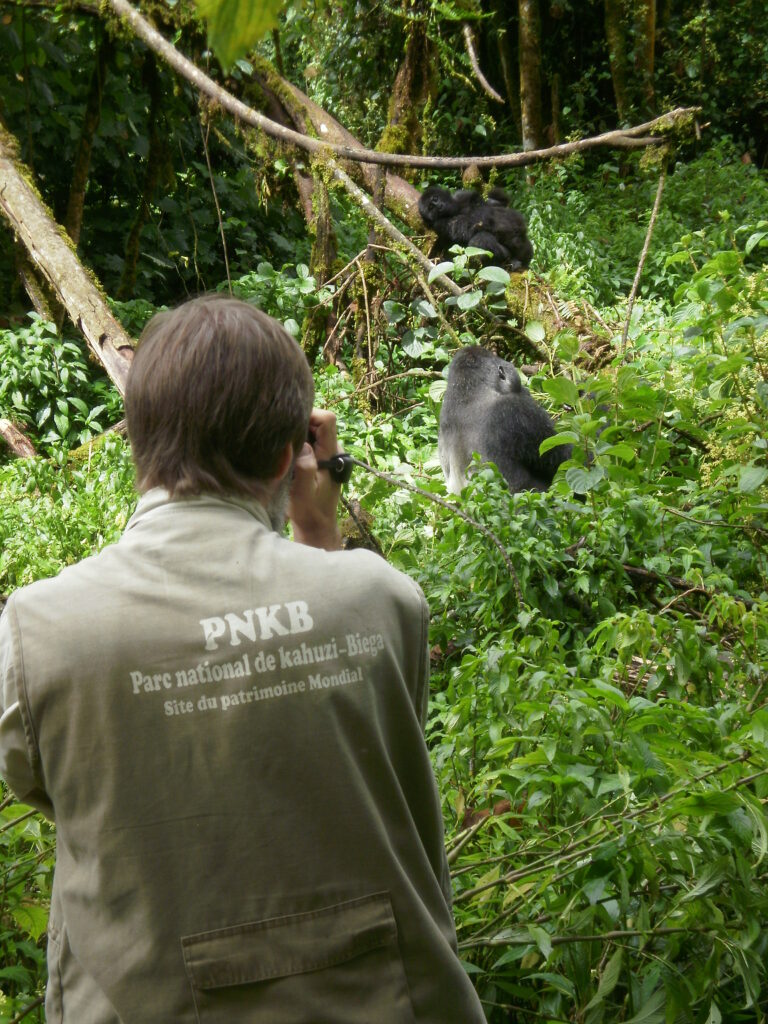
Photo Credit – Ian Redmond
What are the main threats to gorillas and their habitats?
For three of the four subspecies – loss and degradation of habitat due to agricultural expansion, extractive industries (logging and mining) and building infrastructure such as roads, railways and pipelines – all of which are complicated by civil war and unrest in some of the 10 African countries where gorillas naturally occur.
As well as the unintentional impact of those activities, they all make previously inaccessible areas of gorilla habitat accessible to poachers: illegal hunting – for bushmeat, talismans and live infants for the illegal wildlife trade – is the other major threat.
The ivory trade also impacts gorillas because when forest elephants are extirpated, the quality of the habitat declines for gorillas. On top of those are the global threats of climate change and biodiversity loss leading to ecosystem collapse. This is a new threat facing even the mountain gorillas, which are the only non-human great ape to be increasing in number (but only 1,000 individuals, up from about 400 in the 1970s) thanks to the dedicated rangers or Rwanda, Uganda and the Democratic Republic of Congo (DRC).
Another increasing threat is the emergence and spread of diseases such as ebola among gorilla populations.
Why are rangers so important in the conservation of gorillas?
Rangers are the front-line workers in efforts to stem all the above threats to gorilla. One day rangers might be confronting armed poachers and illegal loggers, another day helping desperate communities facing hunger because the rains have failed, and sometimes caring for orphan gorilla infants rescued from traffickers. Rangers have to be multi-skilled, adaptable, tough and sensitive!
How can we best support rangers working to conserve gorillas?
Rangers deserve our admiration – they are heroes of conservation doing difficult and dangerous work for the benefit of the whole world. Let’s recognise that at every opportunity.
Organisations such as the Thin Green Line Foundation UK depend on donations and fund-raising efforts of the public, so we can all support them. Anyone lucky enough to go on holiday in Africa should visit gorillas – carefully regulated tourism helps fund conservation and creates jobs that lift local communities out of poverty.
A new driver of the illegal wildlife trade is selfies and profile pics for social media – we can all complain to the social media platforms when we see videos or photos using wild animals as props or pets.

Photo Credit – Arend de Haas
What are the threats to gorillas from climate change and biodiversity shifting?
You can have the best protected forest in the world, but if it stops raining, the trees and forest animals will die. Predictions for sub-Saharan Africa if average global temperatures rise by 4 degrees are that much of the continent – including the Congo Basin, will become arid. Thus, it is imperative for all life on earth that we prevent this outcome.
Fortunately, Africa’s forests are essential for global climate stability, and in the ten gorilla range states, gorillas are a keystone species – #GardenersoftheForest – so conserving gorillas in their natural habitat is an important way of preventing dangerous climate change and halting the loss of biodiversity in those globally important forests.
How can our Thin Green Line Foundation UK supporters help gorillas and the rangers protecting them?
As well as all the traditional ways to raise money for a deserving cause – sponsored runs, swims, bungee jumps, etc. there will soon be a new method. Supporters can now subscribe to Ecoflix through Thin Green Line Foundation UK for about the price of a cup of coffee once a month and you get to watch amazing wildlife documentaries and 100% of your subscription goes to Thin Green Line Foundation UK to train and equip rangers and support them and their families in time of need. Subscribe to our Ecoflix channel here
Thank you Ian for your compelling insights into gorillas, how we can collectively help them and the rangers protecting them and for your unwavering support as our Trustee.
Thin Green Line Foundation UK has supported a number of projects over recent years which have directly or indirectly impacted gorilla conservation.
Back in 2021, TGLFUK along with the African Conservation Foundation helped to fund training and equipment for community rangers in Cameroon working to protect Africa’s most endangered great ape, the Cross River Gorilla, and its habitat. As well as technology such as smart phones, gps and camera equipment, the rangers were also in need of basic field equipment such as tents and sleeping mats. This has meant that rangers can work more safely and effectively monitoring the gorillas and the threats to their habitats.
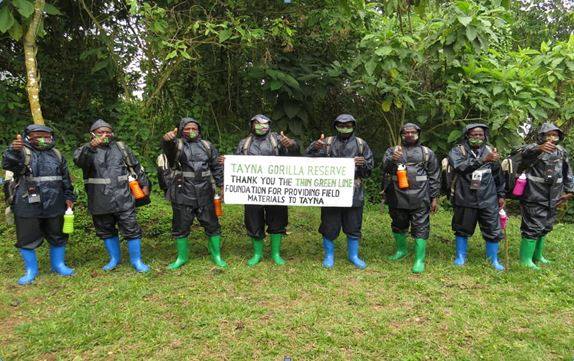
We have also been involved in sending protective equipment and clothing to rangers working in national parks in the DRC, including boots to Tayna Gorilla Reserve and facilitating the distribution of uniforms donated by rangers in Canada to various parks across the country.
Sadly, many rangers protecting gorillas and their habitats across Africa often find themselves in very dangerous situations confronted by armed poachers and militia groups. Our Fallen Ranger Fund has supported the family of a brave ranger killed on the front line of gorilla conservation in Virunga National Park, DRC, providing them with much need emergency funds to help them through the immediate aftermath of such a tragic loss.
You can support our work protecting the rangers who protect gorillas with a donation here.