
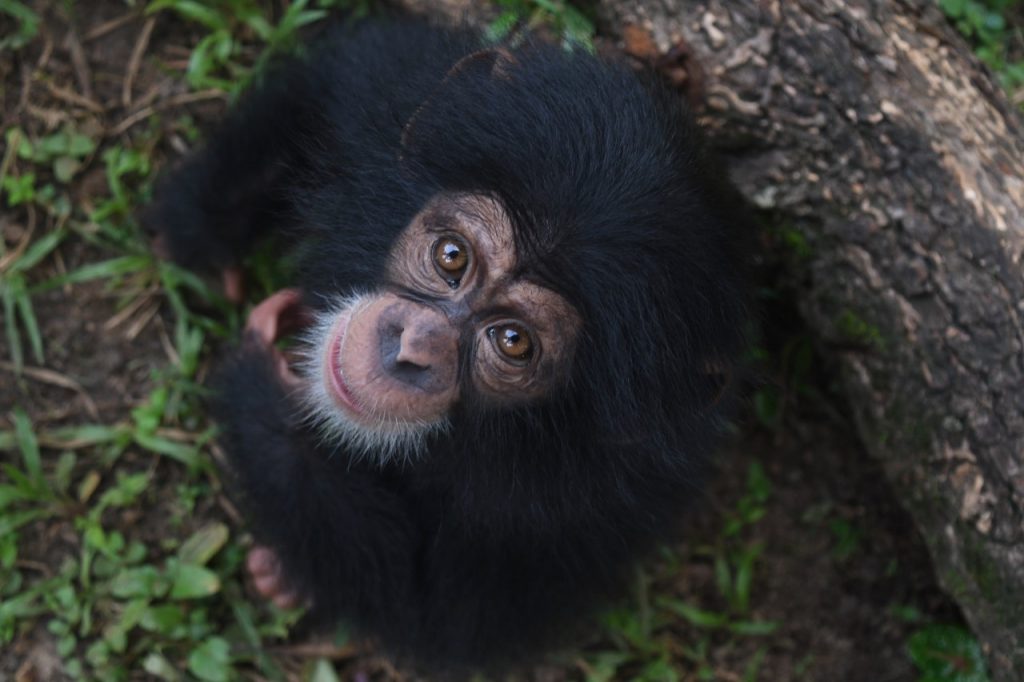
Photo Credit: LCRP
Imagine doing your job with no phone….
Now imagine your job is protecting endangered wildlife from trafficking in a remote forest… with no phone…
In spring 2021, we worked with our partners at Liberia Chimpanzee Rescue and Protection (LCRP) to provide Liberia’s forest rangers with smart phones to better equip them in their vital role combatting the international wildlife trade. Liberia has amazing biodiversity and is home to many iconic and threatened species such as the western chimpanzee, forest elephant and pygmy hippopotamus. However due to its coastal location and large port, it is a hotspot for the illegal trade in wildlife, and as a result, wildlife populations in Liberia and neighbouring countries are under serious threat. LCRP is a charity dedicated to rescuing and caring for chimpanzees caught up in the bushmeat and international trafficking trade, as well as the conservation of wild chimpanzee populations. For this project, they teamed up with Liberia’s Forest Development Authority (FDA) who employ rangers at key checkpoints to try and intercept the illegal trade in chimpanzees and other wildlife.
The FDA are leading the fight against international wildlife trafficking, and although the government have recently passed a number of laws around environmental conservation and wildlife trade, enforcement is difficult due to a lack of capacity and resources.
The rangers were in desperate need of equipment to enable them to carry out their work. Providing each checkpoint with a smart phone had many benefits. Rangers are now better able to communicate quickly with each other and the authorities about cases of wildlife trafficking. It also means that incident forms can be completed online immediately as discoveries of illegal trade are made. The phones mean photographic evidence can be used to build up a database of incidents and species, and also help rangers to quickly identify species. Thin Green Line Foundation UK have funded a total of 20 handsets for rangers working in the field to stop this appalling trade.
Ultimately, the provision of these smart phones will lead to more successful arrests and prosecutions, more wildlife protected from illegal trade and better protection of species and habitats in Liberia and other West African countries.